I've moved!

I'm still writing; you just won't find me here any longer. If you want to keep reading my writing, head over to mollyflinkman.com. I'll keep a cup of coffee warm for you.

Friday, July 27, 2012

four.

word of the day: anniversary \fȯr\ the fourth in a set or series

Four years ago today, Jake and I set out on our honeymoon.  We were driving to Colorado, and we stopped half way in Kearney, Nebraska to split up the drive.  We stayed the night in the Wingate hotel, ate dinner at the Whiskey Creek, and saw the newest installment of the Batman movies: The Dark Knight.  It was simple, but it was one of the best parts of our honeymoon.
Four days ago, Jake and I set out on another trip, and we drove straight to Kearney, Nebraska.  We stayed the night at the Wingate hotel, ate dinner at the Whiskey Creek, and saw the last installment of the Batman trilogy: The Dark Knight Rises.  It was simple, but it was a grand way to celebrate four years of marriage.
Four years.  Jake often says that if he looks back on our marriage as a whole, it seems to have flown by—moved so quickly that we can’t keep up.  But, if you look at specific points of our marriage—the wedding, vacations, and significant moments thus far—you start to realize how much we’ve already been through.  How much we’ve already experienced together.

The last couple of years have thrown many things into our marriage.    Things that suck away our time or cause irritation and stress.  Things, I suppose, would make it easy to say, “I wish we could go back to the way things used to be.  When they were simpler and easier.”

But I don’t wish I could go back to the way things used to be.  With every new obstacle that gets thrown our way, we figure out a way to maneuver it (well let’s be honest, Jake figures out a way to maneuver it) and we continue to move forward.  These things add dimension to our lives and have become our new normal; they affect the way we interact, and we work hard to make them work. 

I imagine each subsequent year from here on out will bring more to the mix.  Things that may even make us wish we could come back to this point because it’s simpler and easier.  But I think it all just is.  That’s a fairly ambiguous statement, but it often brings me peace when walking into something new and unknown.  It just is, and we’ll work to make it work.   We’ll have help of course, and my hope is that our lives are lived in a way that reflects the Source of that help.  Amidst all else, He's the one thing in our lives that never changes, and that's something to hang your hat on. 

So here's to four more--whatever they may throw our way.


Thursday, July 12, 2012

story: chapter three.

word of the day: story \str-ē\ a person that wants something and is willing to overcome conflict to get it.
Lately I’ve been thinking quite a lot about what role I play in the story of my life.  The obvious first thought is the protagonist.  The main character of the story.   It is my story after all, isn’t it?  I make the choices; I walk the road.  I hold the pen.
When I think about this passage, I’m not so sure that’s entirely accurate:

[When] you live a story[,] the first part happens fast. You throw yourself into the narrative and you’re caught in the water, the shore is pushing back behind you and the trees are getting smaller. The other shore is inches away and you can feel the resolution coming, the feeling of getting out of your boat and walking the distant shore, looking back to see where you came from. The first part of a story happens fast, and you think the thing is going to be over soon. But it isn’t going to be over soon. The reward you get from a story is always less than you thought it would be, and the work is harder than you imagined. It’s as though the thing is teaching you the story is not about the ending but about the story itself, about your character getting molded in the hard work of the middle. The shore behind you stops getting smaller, and you paddle and wonder why the same strokes used to move you but they don’t anymore…The shore you left is just as far and there is no going back, there is only the decision to paddle in place or stop, slide out of the hatch and sink into the sea. Maybe there is another story at the bottom of the sea? Maybe you don’t have to be in this story anymore? Maybe you can quit and not have to paddle in place anymore? [1]

I think I thought the story ended in Africa.  I think I thought that I would go to Africa and my life would change and my problems would be solved. 

As someone who is largely driven by fear (I’m really good at calculating risks and using those calculations in deciding against most things I deem even slightly risky), going to Africa shattered my comfort zone.  I was forced to face fear head on.  And I think I thought that such a trip would fix me.  No more fear.   
The experience didn’t fix me though.  At times, the irrational feeling of fear still prickled up my neck in the middle of the night.  It lingered, and I found myself frustrated that such an extreme experience couldn’t rid me of my vice.

It reminds me of Paul’s words in 2 Corinthians 12:

So to keep me from becoming conceited because of the surpassing greatness of the revelations, a thorn was given me in the flesh, a messenger of Satan to harass me, to keep me from becoming conceited.  Three times I pleaded with the Lord about this, that it should leave me. But he said to me, “My grace is sufficient for you, for my power is made perfect in weakness.” Therefore I will boast all the more gladly of my weaknesses, so that the power of Christ may rest upon me.  For the sake of Christ, then, I am content with weaknesses, insults, hardships, persecutions, and calamities. For when I am weak, then I am strong.
Fear is the thorn in my flesh, and I can’t tell you how many times I’ve asked God to take it away.  Life would be so much easier if I wasn’t afraid of everything that comes or potentially-maybe-sometime-in-the-future-might come across my path.  But God’s words bring me great encouragement: My grace is sufficient for you, for my power is made perfect in weakness.
I have realized that I may have to fight fear my entire life.  It’s a lie that is deeply rooted within me, and one that I will continually have to combat with truth.  One that I will continually combat with truth.  But fear doesn’t have to keep me from moving forward.  It’s like when you stand on a beach and let the tide roll over your feet.  You can only stand still for so long until all the sand has been taken out from under you and you have to take a step.

I went to Africa.  I took a step.  God’s power is made perfect in my weakness. 
The reward you get from a story is always less than you thought it would be, and the work is harder than you imagined. It’s as though the thing is teaching you the story is not about the ending but about the story itself, about your character getting molded in the hard work of the middle.

My story isn’t about the ending; it’s about the story itself.  And, the hard work of the middle—the part where I get molded and shaped—well that part isn’t really about me either.  It’s about the One who’s made perfect in my weakness. 

I don’t want to throw the oars over the side of my boat.  I don’t want to slide out the hatch and sink into the sea.  I don’t want to give up on the story I’ve been given.

I want to choose to face fear and write a story in which I am content with weaknesses, insults, hardships, persecutions, and calamities. For when I am weak, then I am strong.

And with all this in mind, I sort of feel like my story’s just starting to get good. 
[1] Miller, Donald. A Million Miles in a Thousand Years: What I Learned While Editing My Life. Nashville, TN: Thomas Nelson, 2009. Print.

Wednesday, July 4, 2012

story: chapter two.


word of the day: story \str-ē\ a person that wants something and is willing to overcome conflict to get it.

It’s hard to miss God in a place like Africa.  The natural beauty that surrounds you is enough, at times, to take your breath away.

He’s in the waves as they roll along the edge of coast.

Let the heavens be glad, and let the earth rejoice; let the sea roar, and all that fills it.  
Psalm 96:11

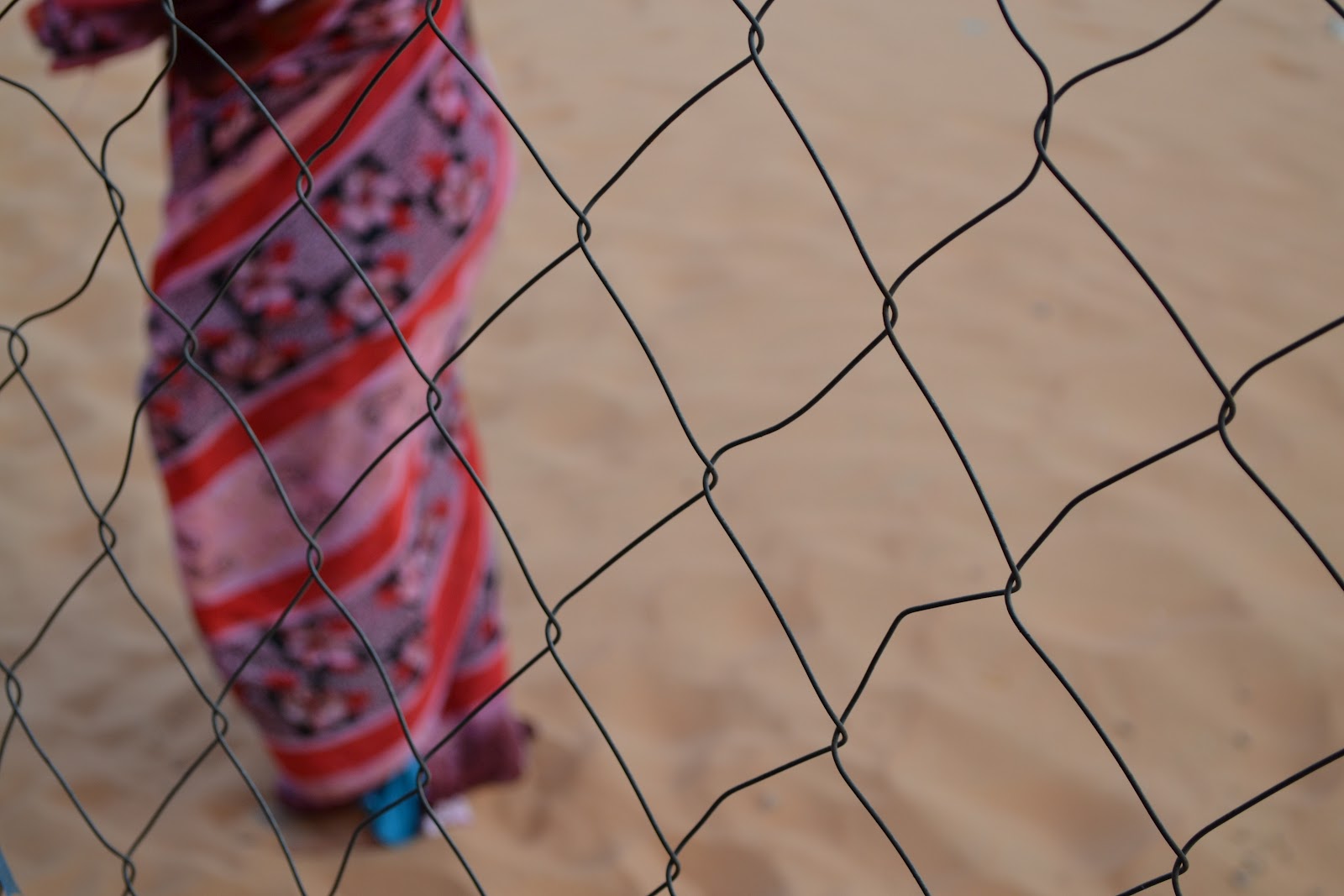
He’s in the shifting sands of the Sahara desert.
Do you not fear me? declares the LORD. Do you not tremble before me? I placed the sand as the boundary for the sea, a perpetual barrier that it cannot pass; though the waves toss, they cannot prevail; though they roar, they cannot pass over it.
Jeremiah 5:22

He’s in the hazy sky of a setting sun.
 The heavens declare the glory of God, and the sky above proclaims his handiwork.
Psalm 19:1

He’s in the plants that bring life to the desert.

 The wilderness and the dry land shall be glad; the desert shall rejoice and blossom like the crocus; it shall blossom abundantly and rejoice with joy and singing.
Isaiah 35:1

Every story needs a good setting.  I always try to push my students’ thinking when it comes to setting.  It’s one thing to identify the setting; it’s an entirely different thing to analyze how the setting affects the mood and themes of the story.  Setting is bigger than just a place.  For me, the setting is bigger than just Africa

It’s a lofty task to put into words what you’ve learned about God.  And so, the best way I can think to put it is that I’ve realized that God is the same.  The God of the desert dunes and crashing ocean waves is the same God who resides among the corn fields of Iowa.  The setting of Africa has reminded me that God is everywhere.  In the big, in the small, in the parts that barely cause you to bat an eye.  His presence fills every space, and I have only to choose to let that presence continue to permeate my life.

I think there is something to be said for being content with your setting.  For looking at life and finding ways to serve in the here and now.  I think in the past I would have used that as a justification to stay comfortable—the idea that God also needs people in America.  Coming back from Africa, I see the tendency to feel like you’re not really being used unless you’re in a part of the world that few choose to go.  Unless you’re doing “big things.”  Now I see that there’s never really an end to the story (more on that next post), and if you keep your hands open, you’ll have more opportunities to serve than you can hold onto.  It’s not about excuses for staying put; it’s about openness to where God has you and wants you.  I understand that now more than ever.  I imagine He’ll pull me out of my comfort zone again someday, but for now He needs me to serve where I’m at.  

God does big things in Africa—there’s no question about it.  But the same God of that desert has me in Des Moines, Iowa for the time being.  I can choose to long for the day when I can do “big things” again, or I can choose to love that kind of love that drops everything to meet your present need.   To let the God of the ends of the earth meet me where I’m at right now and help me take it one day at a time. 

I hope to hold on to the latter in whatever country or culture or setting God takes us.

Friday, June 29, 2012

story: chapter one

word of the day: story \stȯr-ē\ a person that wants something and is willing to overcome conflict to get it.

I am convinced that the most beautiful part of Africa is the people.  That’s true of most stories though, I suppose. 
For me, it’s always the characters in books that keep me moving forward.  In fact, I tend to get overly emotionally involved in their lives.  I laugh with them, I cry with them, and I often feel a deep sense of loss when the last page is turned. I didn’t read anything for weeks following the last Harry Potter book—getting to know new characters felt like a betrayal to the ones I had just spent seven books with.  Recently, I stopped a book in the middle because I didn’t agree with the choices a character was making—I didn’t believe in her and didn’t care to be a part of her story.

It’s the same with people, I think.  People are important. They are the characters in our stories who move us forward.  The 6th grade teacher who first helped you fall in love with reading.  The high school coach who taught you the benefits of hard work.  The stranger on the street who smiled and waved as they waited for you to cross the street.  They all impact our journey in some way (whether or not they’re aware of it at the time).
In the three weeks I was in Africa, more characters were written onto the pages of my story.  They were beautiful.  And they were hospitable.  And they reminded me that people are really what matters in this life.

During our trip, someone on our team noted that the people of Africa really aren’t that different from the people of America, and I couldn’t agree with her more.  The people of Africa have dreams.  They laugh.  They cry. They make sarcastic jokes and tease one another.  They smile.  They ache.  They worry about the future.  It’s not difficult to relate to the people because, at the core, we’re all people.  Our cultures are different; our needs are the same.
I realized, while in country, my tendency to stereotype.  As Americans, we are fed a clear picture of what danger looks like overseas.  That danger is often personified through the people—they become a picture of the problems, and I’m sad to say that at times I carried that picture with me.

Early on in the trip, we spent an evening in the desert with some local women.  As we made our way back to our apartment, our car started acting up.  The clutch was finicky and was stalling at every stop (which in Africa traffic is approximately every 10 seconds).  The driver of our car urged us to pray, and so the four of us prayed very fervently that our car would work, and we’d make it out of the very busy and people ridden section of town. 

No luck.

As we pulled our way onto a side road and stopped to wait for a ride, I found myself fairly frustrated with God.  “Really?” I can remember thinking.  It’s not that hard to start a car back up.  And, we were all asking for it.  It’s not like it would have taken that much to get us moving again.”  Then I had another thought: It would have been easy for Him to start the car back up again.  But He didn’t.  So, there must have been a reason why.

At that moment, our car was surrounded by local people.  And they were smiling.  And they wanted to welcome us into their homes while we waited.  That was why.  I needed my picture of the people torn to shreds.  I needed to be reminded that the people of Africa are kind and spirited and generous.  That they will do anything in their power to make sure you feel welcome in their country and in their city and, eventually, in their homes (because that’s always where you end up anyways). 

The most beautiful part about Africa is the people, and I guess what I really learned about others is that you can’t miss that.  You can’t get so caught up in your own issues and your own agendas that you miss out on the beauty of people.  On the hurt of people.  On the dreams of people.  On the needs of people.  Because no matter where you go, you’re bound to meet people.  And when we choose to love those people despite everything else that may be going on, we choose to write something beautiful into our stories. 

It’s humbling to be the benefactor of this kind of love.  The kind that drops everything to meet your present need.  The kind I hope now to take with me in every walk of life. 


Wednesday, June 27, 2012

story: an introduction.

word of the day: story \stȯr-ē\ a person that wants something and is willing to overcome conflict to get it.

Today’s definition comes not from Merriam-Webster.  Instead, it’s lifted off the pages of Donald Miller’s A Million Miles in a Thousand Years, a book in which I very deeply resonate with.

The premise of his book is simple: as people, we live stories.  We are the protagonists of our own life stories, and we have the ability to choose how the pages pan out.  We hold the pen. 

I love this excerpt from the book:

[When] you live a story[,] the first part happens fast. You throw yourself into the narrative and you’re caught in the water, the shore is pushing back behind you and the trees are getting smaller. The other shore is inches away and you can feel the resolution coming, the feeling of getting out of you’re boat and walking the distant shore, looking back to see where you came from. The first part of a story happens fast, and you think the thing is going to be over soon. But it isn’t going to be over soon. The reward you get from a story is always less than you thought it would be, and the work is harder than you imagined. It’s as though the thing is teaching you the story is not about the ending but about the story itself, about your character getting molded in the hard work of the middle. The shore behind you stops getting smaller, and you paddle and wonder why the same strokes used to move you but they don’t anymore…The shore you left is just as far and there is no going back, there is only the decision to paddle in place or stop, slide out of the hatch and sink into the sea. Maybe there is another story at the bottom of the sea? Maybe you don’t have to be in this story anymore? Maybe you can quit and not have to paddle in place anymore?

I often think about this in my life retrospection.  What kind of story am I living? Am I living something that’s worth telling someone else?  Or am I living a mediocre fantasy story with little prospect of being turned into a movie?  Am I getting fed up in the middle?  Am I tossing the oars overboard or am I layering on an extra coat of resilience and packing an extra bottle of ink?

I wrote a new chapter into my life recently.  The current in-progress title is “Africa," and I know.  It has some jazzing up to do.

Jake and I returned from three weeks in Africa this past Sunday night, and since then, I have been agonizing over how best to write about it.  How best to tell the story.

Consider this the introduction to the story because even as I put these words down, I’m dotting a few i’s that I hadn’t realized I’d written yet.

I was asked three questions about the trip before we set sail back to the States:  What did you learn about others?  What did you learn about God?  What did you learn about yourself?

At the time, I was frustrated to be sans an answer.  I had no real clarity around any of the questions and couldn’t seem to form answers that contained any substance.  Well, it should not surprise anyone that I have been processing answers to said questions since they were asked and now, it’s the only organization to my thoughts that feels right. 

So, if you’re interested in hearing about our trip to Africa, this post isn’t going to give you any answers.  The next three will though; I promise, so stay tuned.  Until then, let me appease you with some pictures…


To be continued...

Wednesday, May 23, 2012

lesson.


word of the day: lesson \le-sən\ a piece of instruction; something learned by study or experience
It always surprises me how quickly summer vacation arrives.  Monday night I was up until Midnight grading research papers; this morning I slept in until 9:00.  It always catches me a little off guard. 

In order to ease that transition, the first thing I feel compelled to do, on this beautiful morning is write.  A task that is therapeutic to me in more ways than one because with writing comes reflecting.  And reflecting always seems to help me move forward.

As teachers, we are no strangers to lessons.  We plan them daily.  We create anticipatory sets in an attempt to get students excited about the learning ahead.  We carefully balance group work and independent practice so that students are able to have multiple approaches to mastery.  We let students see inside our minds as we model certain processes to thinking.  We are acutely aware of when a lesson is tanking and spend the four minutes in between classes scrambling to make it better.  We do everything we can to make sure learning happens on a daily basis, and many teachers will tell you that the most rewarding part of the job is the “aha moment.”  That instance where you hear a kid say, “Ohh. I get it.”

I’ve always (somewhat facetiously) thought of teaching as my superpower.  Now that I really think about it, I think it’s the learning.  It’s the acquisition of new knowledge that keeps us moving forward—that motivates us to be better at what we do. 

It’s not just student learning though.  As I sit here and reflect on all that was this past school year, I wonder who really learned more lessons. I might give those students a run for their money.

Since August, I have learned that 9th graders are really very funny.  They surprised me with their creativity this year.  I saw the whirlpool monster Charybdis depicted as a toilet.  I heard a barbershop quartet (or something like it) sing a summary of Odysseus’ run in with the Cyclops.  I saw said Cyclops devouring men (Ken dolls) through the make-shift construction paper mouth that really served a perfect purpose.  I laughed a lot this year and was thankful for the reminder that, when given the opportunity, most students will rise and accept the challenge to create great things.

I have also learned that personal growth comes when you least expect it.  It comes when you’re thrust into something you’re not ready for or when you’re met with a task you don’t feel qualified for.  It happens slowly, and when you’re on the other end, you wonder, “Haven’t I always been this way?”

I have learned that encouragement goes a long way.  That some days, it makes all the difference.  I have a card from my mom that hangs above my desk with this Chuck Swindoll quote:
Encouragement is awesome.  It has the capacity...to breathe fresh fire into the fading embers of smoldering dreams, to actually change the course of another human being's day, week or life. 
I lived on the receiving end of this many times this year—the smiles in the hallway, the email first thing in the morning, or the sticky note reminders that I matter—and I don’t know what I would have done without those people who were clearly placed in my life for a reason.

I have learned that people innately carry their struggle with them.  The student who acts out is most likely dealing with something difficult outside the walls of my classroom.  In those cases, it’s not just my responsibility to teach.  It’s also my responsibility to understand and care. 

I’m thankful for all that transpired between August and May.  I’m thankful for the students who walked in my classroom on a daily basis and for the people whose lives intersected mine just as often.  Because of the mistakes and the laughter and the tears and the celebrations, I am better.  I have learned, and I have grown.  And really, what more can you ask for? 

Saturday, May 5, 2012

sister.

word of the day: sister \sis-tər\ a female who has one or both parents in common with another

It’s funny how memories slip away.

Things that seem so significant at the time and then, years later, are only snapshots and still frames in your mind.  Sometimes I’m not even sure if I actually have a memory of something or if I’ve just put enough photographs together to make myself really believe I remember that moment in time. 

I don’t remember much from my childhood.  I wonder if it’s because I existed inside my head for much of it.  As a kid, I spent a great deal of my time alone with my imagination.  I contrived elaborate storylines and play acted all the roles with nary a spoken word.  If my bedroom door was closed, chances are I was pretending to be a servant girl who just so happened to be the long lost sister of the princess.  I was an only child.

For eight years, that is.  Then something significant happened: I became a big sister.  I wish I could say I remembered the day clearly.  That I remember walking up the steps to the attorney’s office.  That I remember sitting in the lobby picking at my fingers awaiting her arrival.  That I remember being caught speechless when my mom placed her in my arms for the first time.

I don’t really remember any of those things—there’s an oversized chair in my memory and a slight feeling of nervousness, but other than that, all I’ve got are the photo albums and verbal retellings.

I was thinking about it today and feeling badly that my memory is so fuzzy.  I was a third grader after all.  Isn’t that when you start remembering important things?

Here’s my theory: Hannah has just always been.  I don’t remember a time when she wasn’t my sister, and I totally prefer it that way. 
I don’t remember a time before her big, brown eyes entered the picture, and when I stop to think about it, I suddenly remember all the things that have become the still frames of my memory.

There are the times I treated her like a doll and dressed her up in all sorts of ensembles.  There are the times I forced her to sit in the basement with my chalkboard and jar of pipe cleaners trying to get her to write her name.  There are the times we tried our own version of Morse Code on the walls as we laid in bed at night.
I’ve been realizing lately that my baby sister isn’t a baby any more.  But some things never change.  She continues to be full of energy and her big, brown eyes can still melt your heart.  She continues to love people with a kindness I admire, and her loyalty is one of her best traits.  She can still beat me in a foot race because, let’s face it, I don’t know that there was ever any alternative.
It’s funny how memories slip away.  No matter how significant a moment of time is, as the years pass, little pieces of it chip away.  They come and go, but the picture is never as clear.

The solace is that the past is never as important as the right now.  And the truth of the right now is that I’ve never been so proud to be a big sister.